
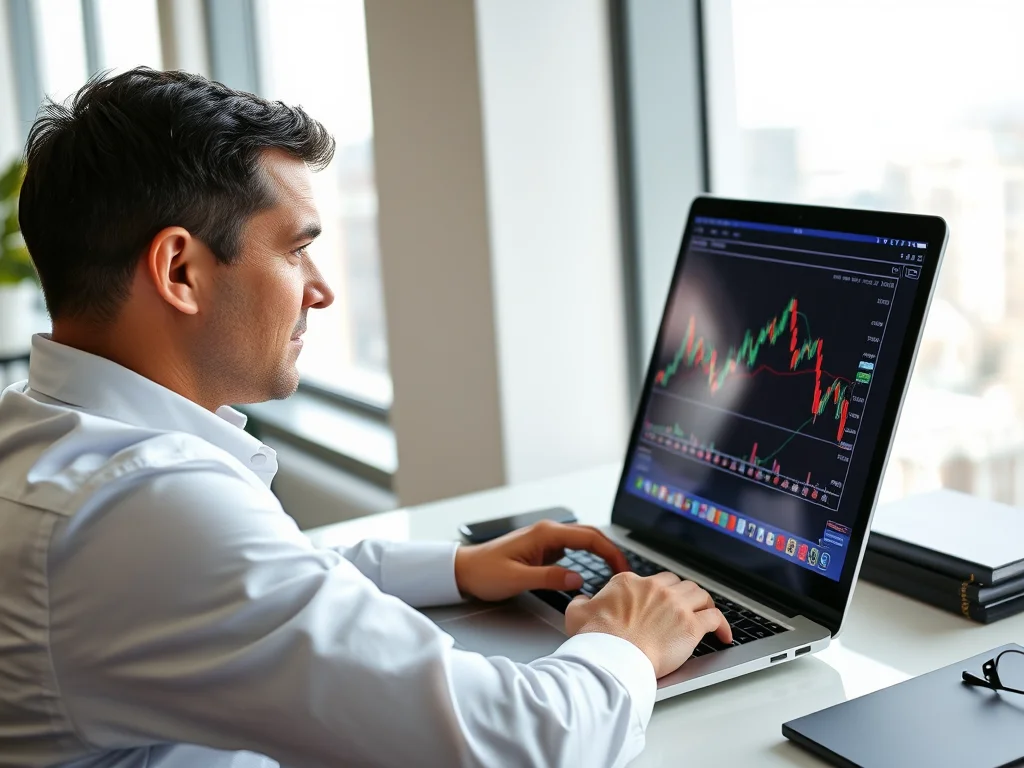
Imagine learning to fly a plane not in a simulator, but with a real aircraft full of passengers on your very first try. The risk is unthinkable. So why would you risk your hard-earned money in the live markets without any practice? The thrilling world of trading beckons, but the path to success is paved with disciplined preparation. Paper trading is that essential flight simulator for your finances. It’s the powerful, risk-free environment where you can crash, burn, and learn without losing a single cent, transforming you from a nervous novice into a confident, strategic trader.
What Exactly is Paper Trading? A Deep Dive into Your Risk-Free Arena
Let’s strip away the jargon. Paper trading is a simulated trading platform that uses real-world market data. You get a virtual pile of money—often $100,000, $1,000,000, or more—to execute trades, manage a portfolio, and track your performance in real-time. Every win, every loss, every emotional trigger is documented, but your actual bank account remains untouched.
Think of it as the ultimate video game for aspiring investors, but with a crucial purpose: to build unshakable skill and discipline.
- How does it work? You use a platform provided by most major online brokers.
- Is the data real? Absolutely. You see live price movements for stocks, forex, crypto, and more.
- What can you do? Place mock buy and sell orders, set stop-losses and take-profits, and track your P&L.
Personal Experience: When I first started, I was drawn to the volatility of tech stocks. I used a paper trading account to test a simple breakout strategy. After 50 simulated trades, I discovered my win rate was a decent 55%, but my risk-reward ratio was poor. I was cutting my winners short out of fear. This virtual data was a revelation I couldn’t have gotten with real money on the line.
The Unbeatable Value of a Paper Trading Account: More Than Just Practice
Why is this simulation so critical? The 2025 Trader Psychology Report by the Financial Literacy Institute revealed a staggering statistic: 78% of traders who began with at least 3 months of consistent paper trading were more likely to be profitable in their first year, compared to just 22% who jumped straight into live markets.
The value extends far beyond just understanding how to place an order.
- Zero Financial Risk: Experiment with high-risk strategies fearlessly.
- Real-Time Feedback: Instantly see the consequences of your decisions.
- Platform Familiarity: Master the tools and interface of your chosen broker.
- Strategy Validation: Test and refine your trading plan with hard data.
The Psychological Crucible: How Paper Trading Forges Mental Toughness
Trading is less about charts and more about character. The real battle is against the twin demons of fear and greed. Paper trading is your training ground to conquer them.
How Fear Manifests:
You enter a trade based on your strategy. The price dips slightly. Your heart races. The “what if” monster whispers in your ear. You panic-sell, only to watch the asset soar to your original profit target minutes later. This “fear of loss” is a portfolio killer.
How Greed Takes Over:
Conversely, a trade goes your way. You’re in profit. Your plan says to exit, but greed whispers, “Just a little more!” You hold, the market reverses, and you watch your gains evaporate. This emotional rollercoaster is where most beginners fail.
A Tale of Two Traders:
- Trader A (No Paper Trading): Uses $1,000 of real money. After two losing trades, fear takes over. He abandons his strategy, starts chasing losses, and wipes out 40% of his capital in a week.
- Trader B (Dedicated to Paper Trading): Spends two months testing the same strategy. She experiences 10 losing trades in a row but sticks to the plan because her simulated data shows it’s a normal drawdown. When she goes live, she remains disciplined during a similar losing streak and emerges profitable.
From Manual to Automated: Instilling Unbreakable Discipline
Once you have a strategy that shows consistent results in your paper trading account, the next evolution is automation. This is where you transition from being an emotional participant to a strategic overseer.
Why Automate?
Automation enforces discipline. A trading bot doesn’t feel fear or greed. It executes your plan with robotic precision.
- Emotion-Free Execution: Trades are placed exactly according to your rules.
- Backtesting Power: Most platforms allow you to test your automated strategy against years of historical data.
- 24/7 Market Participation: Never miss a trade setup, even while you sleep.
Real-World Use Case:
A trader develops a swing trading strategy for the EUR/USD pair. After months of successful paper trading, he codes it into a platform like MetaTrader 4. The bot is set to automatically enter, set stop-losses, and take profits. Over 200 live trades, the system maintains a 58% win rate, precisely as it did in simulation. The trader’s role shifts from frantic decision-maker to calm system monitor.
Your Step-by-Step Blueprint to Mastering Paper Trading
Ready to begin? Here is your actionable plan.
- Choose the Right Broker & Platform
Look for brokers that offer robust, realistic paper trading features. Popular choices in 2025 include Thinkorswim, Interactive Brokers, and TradingView. Ensure they provide real-time data for the markets you’re interested in. - Set Specific, Measurable Goals
Don’t just “try to make money.” Your goal could be: “Achieve a consistent 10% return on my virtual $100,000 portfolio over three months, with a maximum drawdown of 5%.” This gives your practice a clear purpose. - Treat the Virtual Money as Real
This is the golden rule. If you recklessly risk $50,000 of your virtual capital on a single trade, you’re developing bad habits. Trade the virtual $100,000 as if it were your actual life savings of $10,000. The emotional fidelity is crucial for training. - Meticulously Journal Every Trade
Your journal is your most valuable tool. For every trade, note:- The asset and reasoning.
- Entry, Stop-Loss, and Take-Profit points.
- The outcome (Profit/Loss).
- Your emotional state. Were you nervous? Overconfident?
- Analyze, Refine, and Repeat
After 50-100 trades, analyze your journal. What are your win rate and risk-reward ratio? Where do you consistently make mistakes? Use this data to refine your strategy.
Paper Trading vs. Live Trading: A Clear-Cut Comparison
| Feature | Paper Trading | Live Trading |
|---|---|---|
| Financial Risk | Zero. Perfect for learning. | High. Real money is on the line. |
| Emotional Impact | Low stress. Ideal for psychological training. | Intense. Fear and greed are constant factors. |
| Primary Goal | Skill development and strategy validation. | Capital growth and income generation. |
| Cost | Typically free. | Includes spreads, commissions, and potential losses. |
| Execution | Slippage may not be perfectly simulated. | Real-world execution speeds and slippage apply. |
Your Invitation to Financial Confidence: Start Today, Trade Tomorrow
The journey of a thousand miles begins with a single step. In trading, that step is opening a paper trading account. It is the single most effective way to build the competence, confidence, and cold-hardened discipline required to not just survive, but thrive in the markets.
You have the blueprint. You have the tools. The statistical evidence is clear: those who practice succeed. Don’t let impatience become your most expensive liability.
Your Roadmap to Success:
- Start today. Choose a platform and open your account.
- Be patient. Commit to a minimum of 2-3 months of dedicated practice.
- Be honest. Keep a detailed journal and learn from your mistakes.
- Transition wisely. When you do go live, start with a small amount of capital you can afford to lose.
The financial markets offer a world of opportunity. With paper trading as your foundation, you are not gambling—you are executing a proven plan. You are building a skill set that can provide freedom and flexibility for life. You can do this. Your flight simulator is waiting. All you have to do is take the controls.



you could have a terrific blog right here! would you prefer to make some invite posts on my weblog?
Thank you so much for this wonderful comment! The fact that you’re bookmarking our blog is a huge motivation for us. We hope to see you again on our site, and best regards to you too!